
Successful ERP implementation does not begin with configuration. It begins with a shared understanding of how the business works, what needs to improve, and how the organization will move forward together.
On August 12, 2026, Something Somewhere Consulting formally launched the Odoo implementation project with Metal Exponents, Inc. through an in-person project kickoff and full-day working session.
The engagement was designed to do more than introduce the project timeline. It brought both teams together to align on scope, governance, business priorities, process ownership, validation routines, data readiness, and the first steps toward user adoption.
At the center of the kickoff was a practical question: how can Metal Exponents create a more connected operating backbone across Sales, Purchasing, Inventory, and Accounting while improving visibility, control, and continuity across the business?
That question shaped the entire day.
Starting With Alignment Before Configuration
One of the most important goals of the kickoff was to establish a common working model before detailed implementation activities began.
The teams aligned on roles, meetings, decision-making, system access, governance routines, and the approved scope of work. They also identified the first areas that would require deeper validation in the succeeding sessions.
The initial focus areas included:
- Sales
- Purchasing
- Inventory
- Accounting
- Landed Costs
- Data readiness
- IT readiness
- Reporting
- Business Testing
- User training and adoption
The working principle was simple: understand the process first, then validate the system design around it.
This helps prevent ERP implementation from becoming a purely technical exercise.
Instead of beginning with assumptions about how Odoo should be configured, the project starts by making the actual work visible—how transactions begin, who owns each step, what evidence supports the process, where decisions happen, and where delays or rework occur.
Building One Connected Trading Backbone
A key business objective identified during the kickoff was the creation of one connected trading backbone across Sales, Purchasing, Inventory, and Accounting.
The goal is to reduce fragmentation and improve the reliability of business information across the organization.
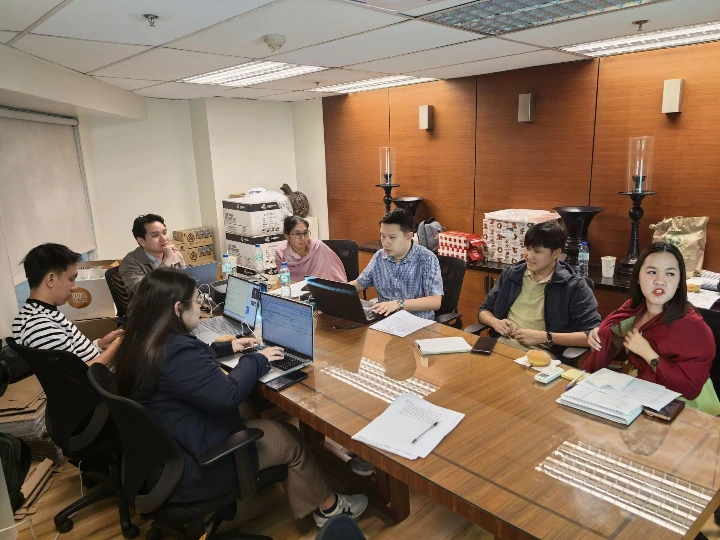
The session identified several areas where greater visibility and process consistency can create value, including stock availability, warehouse movement, replenishment, landed-cost timing, and financial evidence.
Rather than relying on a combination of legacy records, spreadsheets, documents, messages, and manual follow-up, the target operating model is designed to make Odoo the main operational source of truth for approved business transactions.
This does not mean eliminating every existing document or communication tool.
Instead, the aim is to ensure that critical business records, transaction status, approvals, accounting treatment, and governance evidence are connected to the system rather than scattered across disconnected sources.
Moving From Customer Request to Collection
The standard trading flow formed an important baseline for the implementation.
The project will validate how a customer requirement moves through:
Customer Request → Quotation or Sales Order → Stock Check → Delivery → Invoice → Collection
This baseline is important because it gives both teams a common language for discussing process ownership, records, expected outputs, and controls.
A standard process must first work reliably before more complex scenarios are layered into the implementation.
This includes exceptions such as imports, delayed landed costs, multi-warehouse replenishment, payment deductions, data cut-off requirements, and infrastructure readiness.
Starting with the normal case also helps avoid overdesign.
Instead of allowing exceptions to define the entire operating model, the project first establishes a clear standard process and then addresses complexity through controlled validation.
Strengthening Purchasing and Import Processes
The procurement side of the implementation will follow a connected process from supplier request to payment.
The target flow includes:
RFQ or Purchase Order → Receipt → Vendor Bill → Payment
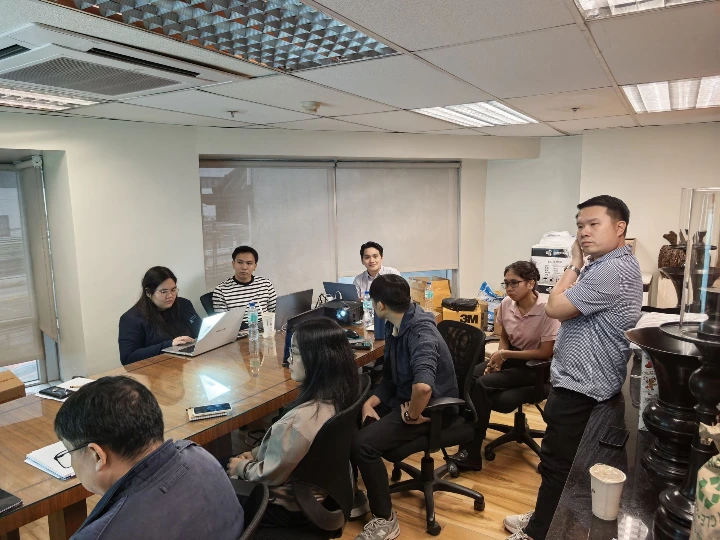
For Metal Exponents, import transactions and landed costs are especially important areas of validation.
Costs such as freight, brokerage, wharfage, trucking, and other import-related charges may not always arrive at the same time as the goods themselves.
This creates an important accounting and inventory challenge: how should those costs be treated when goods are still fully unsold, partly sold, or already sold?
The kickoff identified these scenarios as key validation cases that will require supporting documents, expected calculations, and clear evidence before final process decisions are made.
This approach keeps the project grounded in real operating conditions rather than theoretical design.
Improving Multi-Warehouse Visibility
Warehouse visibility is another major part of the project scope.
Metal Exponents operates stock-owning warehouses in Valenzuela, Taguig, and Tondo, with Tondo identified as the Pick Face location.
The implementation will validate how stock is viewed across these locations and how transfers and replenishment should be managed.
The goal is to give users a clearer picture of:
- What stock is available
- Where stock is located
- What needs replenishment
- What has been transferred
- What has been delivered
- What inventory movement still requires action
Better warehouse visibility supports more reliable sales commitments, purchasing decisions, inventory planning, and financial reporting.
It also reduces the operational risk created when different teams rely on different records or spreadsheets to understand stock position.
Aligning Inventory With Finance
Inventory and accounting cannot be treated as separate processes.
Every receipt, transfer, delivery, adjustment, landed cost, and sale can affect financial records.
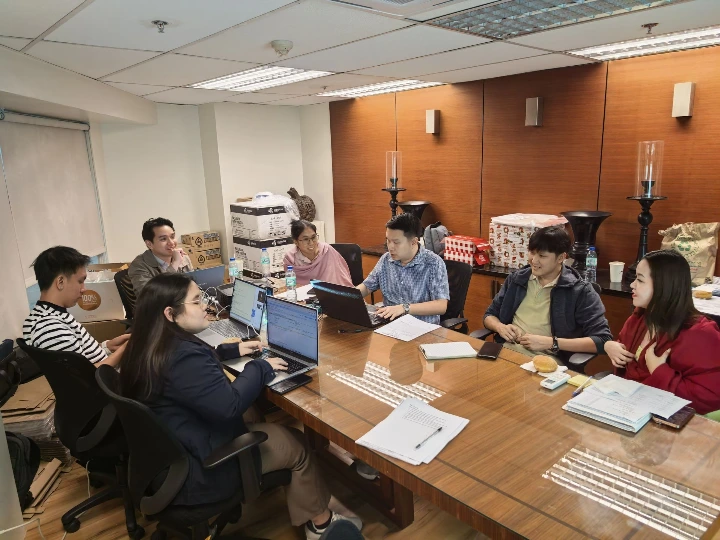
For that reason, the project will validate how valuation, cost of goods sold, expenses, payments, deductions, and reconciliation work together.
The kickoff emphasized the need for Finance to confirm that operational transactions produce the expected accounting treatment and supporting evidence.
This alignment is essential because reliable ERP reporting depends on the accuracy of the transactions that happen before the report is generated.
An integrated system creates value when operational activity and financial information remain connected.
Using ProcessWeave™ to Make the Work Visible
The kickoff introduced SSC’s ProcessWeave™ approach, which structures the engagement around five working stages:
Show → Discover → Map → Decide → Adopt
Show
The team begins by reviewing a simple, standard Odoo process.
This establishes a common reference point for the system language, records, statuses, ownership, controls, and expected outputs.
Discover
The client team explains how the work is actually done today.
This includes understanding who starts the process, who owns it, what evidence exists, what decisions are required, and where handoffs or pain points occur.
Map
The work is organized into process lanes so that ownership and scope become visible.
For Metal Exponents, these lanes include Sales, Purchasing, Inventory, multi-warehouse operations, Landed Costs and Imports, Accounting and Finance, Data Migration, IT Readiness, Business Testing, and Training.
Decide
Each process or requirement is classified according to whether it fits the standard model, requires further validation, belongs in the backlog, or needs formal scope treatment.
Adopt
The process moves from design toward practical ownership.
This means assigning responsible users, preparing evidence, planning validation sessions, and building the readiness required for testing and eventual transition.
The objective is not to design everything during the kickoff itself.
It is to create enough clarity to guide the detailed weekly validation sessions that follow.
Making Decisions Based on Evidence
A recurring principle throughout the session was the importance of evidence.
When a process cannot be confirmed during the kickoff, the project does not fill the gap with assumptions.
Instead, the topic is scheduled for validation.
This is particularly important for areas such as landed costs, data migration, accounting treatment, server readiness, warehouse operations, and reporting.
The project will use real or representative business transactions to validate how processes should work.
This provides a more reliable basis for configuration and reduces the risk of building system behavior around incomplete assumptions.
Controlling Scope From the Beginning
The kickoff also established clear scope guardrails.
The approved Phase 1 scope includes core governance and trading processes across Sales, Purchase, Inventory, and Accounting, together with the three warehouses, import receiving, standard landed-cost validation, master and opening data support, Business Testing, training, cutover support, go-live support, and handover.
More complex requirements—such as custom reporting engines, advanced warehouse automation, complex routes, large-scale historical reconstruction, external integrations, advanced BI, custom code, manufacturing, and highly available infrastructure—are not automatically included.
Where requirements introduce new deliverables, additional complexity, integration, or schedule impact, they will be routed through a backlog or Change Request process.
This discipline helps protect the implementation from uncontrolled expansion while keeping future improvements visible.
Preparing Data and IT Early
ERP readiness also depends on data and infrastructure.
The kickoff identified several areas that need early preparation, including customer records, vendor records, products, units of measure, weights, warehouse locations, categories, opening stock, opening balances, and reconciliation rules.
On the infrastructure side, the project will also confirm server specifications, operating-system requirements, network readiness, DNS and SSL, administrator access, security restrictions, backup and restore responsibilities, and handover ownership.
These items may appear technical, but they directly affect the implementation timeline.
Unresolved data or infrastructure issues can become major blockers later if they are not identified early.
The project therefore treats them as part of readiness, not as last-minute technical tasks.
Building Adoption Alongside the System
The kickoff also reinforced an important distinction between project delivery and change adoption.
Project management focuses on scope, schedule, tasks, risks, evidence, and readiness.
Change management focuses on whether people understand, accept, and adopt the new way of working.
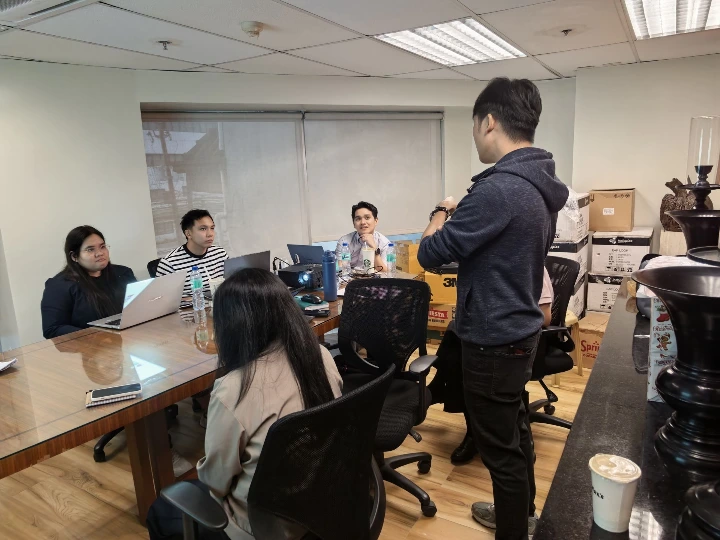
Training is an important part of that journey, but training alone does not guarantee adoption.
Users must understand why the process is changing, what is expected of them, and how the new system should become part of their daily work.
This is consistent with SSC’s broader brand and transformation philosophy: ERP implementation should not be treated as software installation alone.
The objective is to align people, processes, and systems so that the organization can build better visibility, stronger control, greater continuity, and more sustainable ways of working.
A Stronger Foundation for the Work Ahead
The August 12 kickoff marked the formal beginning of a structured Odoo implementation journey between Metal Exponents, Inc. and Something Somewhere Consulting.
By aligning scope, identifying process owners, clarifying governance, establishing validation priorities, and surfacing early data and infrastructure requirements, both teams created a stronger foundation for the next stage of the project.
The work ahead will involve deeper process validation, Business Testing preparation, data readiness, user training, and continued decision-making across Sales, Purchasing, Inventory, Accounting, and related business areas.
But the most important first step has already been taken: creating a shared understanding of how the business should move forward.
At SSC, we believe digital transformation becomes practical when businesses standardize before they digitize, align people with processes, and use technology to support a stronger operating model.
For Metal Exponents, the kickoff was not simply the start of an ERP project.
It was the beginning of building a more connected, visible, and sustainable way of working.
📩 Let’s Continue the Conversation
Ready to explore what better processes, greater visibility, and an integrated ERP system could unlock for your organization?
Start Somewhere with Something Somewhere Consulting and begin building a practical path toward sustainable business transformation.